Embark on a journey of mastering social media with the ultimate guide on How to Use Social Media Marketing Tools: 8 Social Media Management Tools, revealing the key strategies and insights to boost your online presence.
This comprehensive overview delves into the importance, features, and benefits of these tools, providing a roadmap for businesses aiming to thrive in the digital world.
Overview of Social Media Management Tools
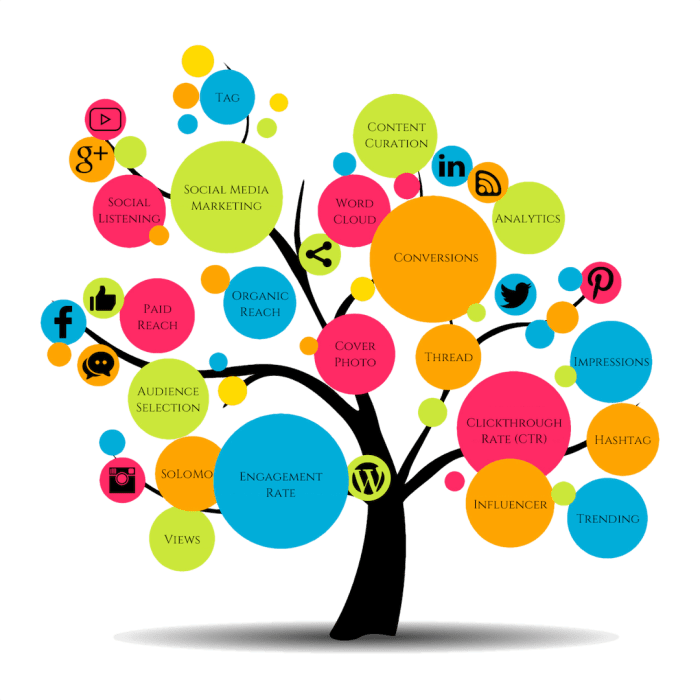
Social media management tools are software platforms designed to help businesses manage their social media accounts more efficiently. These tools play a crucial role in streamlining social media marketing efforts and maximizing engagement with target audiences.
Key Features of Social Media Management Tools:
- Post scheduling: Allows users to schedule posts in advance for optimal timing.
- Content curation: Helps in finding and sharing relevant content across social media platforms.
- Analytics: Provides insights into the performance of social media campaigns and audience engagement.
- Monitoring: Tracks mentions of the brand and industry-related conversations on social media.
- Team collaboration: Facilitates teamwork by allowing multiple users to access and manage social accounts.
Benefits of Using Social Media Management Tools for Businesses:
- Time-saving: Automates repetitive tasks, saving time for more strategic activities.
- Consistency: Ensures consistent posting and branding across all social media channels.
- Improved efficiency: Streamlines social media workflows and reduces chances of errors.
- Data-driven decisions: Provides data and insights to make informed decisions for better results.
- Enhanced engagement: Helps in engaging with the audience in a timely and personalized manner.
Popular Social Media Management Tools
When it comes to managing social media platforms efficiently, there are several tools available to help streamline the process. Let’s take a look at eight popular social media management tools that are widely used by businesses and individuals alike.
Hootsuite
- Allows users to schedule posts across multiple social media platforms.
- Provides analytics to track engagement and ROI.
- Offers monitoring features to keep track of brand mentions and industry trends.
Buffer
- Enables users to schedule posts and analyze performance.
- Offers a browser extension for easy sharing of content.
- Allows team collaboration for seamless social media management.
Sprout Social
- Provides in-depth analytics and reporting tools.
- Offers social listening capabilities to monitor conversations about your brand.
- Facilitates customer engagement through a single dashboard.
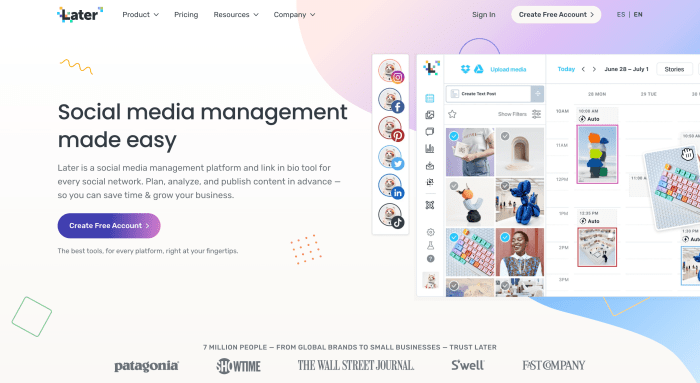
Later
- Specializes in visual content scheduling for platforms like Instagram and Pinterest.
- Allows users to preview posts before they go live.
- Offers a user-friendly interface for easy navigation.
SocialBee
- Focuses on content categorization and recycling to maximize content reach.
- Provides detailed analytics to track the performance of individual posts.
- Offers advanced scheduling options for precise timing of posts.
CoSchedule
- Combines social media management with content marketing tools.
- Facilitates team collaboration with shared calendars and task assignments.
- Offers automation features to streamline marketing workflows.
SocialOomph
- Allows users to schedule posts and monitor social media activity.
- Offers tracking to identify relevant conversations in your industry.
- Facilitates the management of multiple Twitter accounts.
Sendible
- Provides social media analytics and reporting tools for data-driven decision-making.
- Offers a centralized dashboard for managing multiple social media accounts.
- Facilitates client management with customizable approval workflows.
How to Utilize Social Media Management Tools Effectively

When it comes to effectively using social media management tools, there are some best practices to keep in mind. These tools can be powerful assets in executing social media strategies, so maximizing their impact is crucial. Additionally, avoiding common mistakes can help ensure that you are getting the most out of these tools.
Best Practices for Using Social Media Management Tools
- Set clear goals: Before using any social media management tool, define your goals and objectives to ensure that you are using the tool in a way that aligns with your overall strategy.
- Consistent monitoring: Regularly monitor the performance of your social media campaigns using these tools to track progress and make necessary adjustments.
- Engage with your audience: Use the tools to engage with your audience in real-time, responding to comments, messages, and mentions promptly.
- Utilize analytics: Take advantage of the analytics features provided by these tools to gain insights into your audience, content performance, and overall social media effectiveness.
Tips for Maximizing the Impact of Social Media Management Tools
- Schedule content strategically: Use the scheduling feature of these tools to plan and publish content at optimal times when your audience is most active.
- Experiment with different content formats: Try out various types of content, such as videos, images, and infographics, to see what resonates best with your audience.
- Cross-promote across platforms: Take advantage of the ability to cross-promote your content on different social media platforms using these tools to reach a wider audience.
Common Mistakes to Avoid when Using Social Media Management Tools
- Ignoring engagement: Don’t rely solely on automation; remember to actively engage with your audience to build relationships and foster a sense of community.
- Overlooking analytics: Failure to analyze the data provided by these tools can lead to missed opportunities for optimization and improvement.
- Being too promotional: Avoid coming across as overly promotional in your content; instead, focus on providing value and building trust with your audience.
Ending Remarks

As we conclude this exploration of social media management tools, remember to leverage these powerful resources wisely to elevate your brand, engage your audience, and achieve marketing success in the ever-evolving digital landscape.