Embark on a safe hiking journey with our guide on How to Hike Safely: 7 Hiking Safety Tips, ensuring a memorable and secure experience amidst nature’s beauty.
Learn about the importance of safety measures, essential tips for preparation, and how to navigate emergency situations effectively.
Importance of Hiking Safety

For outdoor enthusiasts, hiking safety is paramount to ensure a positive and secure experience while exploring nature. By following safety guidelines, hikers can minimize the risks associated with outdoor activities and enjoy their time in the wilderness.
Common Risks Associated with Hiking
- Poor weather conditions: Unpredictable weather can lead to hypothermia, heat exhaustion, or getting lost in fog or storms.
- Terrain challenges: Uneven trails, slippery rocks, and steep slopes can result in falls or injuries.
- Wildlife encounters: Animals can pose a threat if hikers are unaware of proper behavior around them.
- Lack of preparedness: Insufficient supplies, food, water, or navigation tools can lead to dangerous situations.
Statistics on Hiking Accidents
According to a study by the National Park Service, over 2,500 search and rescue incidents occur annually in national parks alone. These incidents range from minor injuries to fatalities, emphasizing the importance of proper hiking safety measures.
Essential Hiking Safety Tips
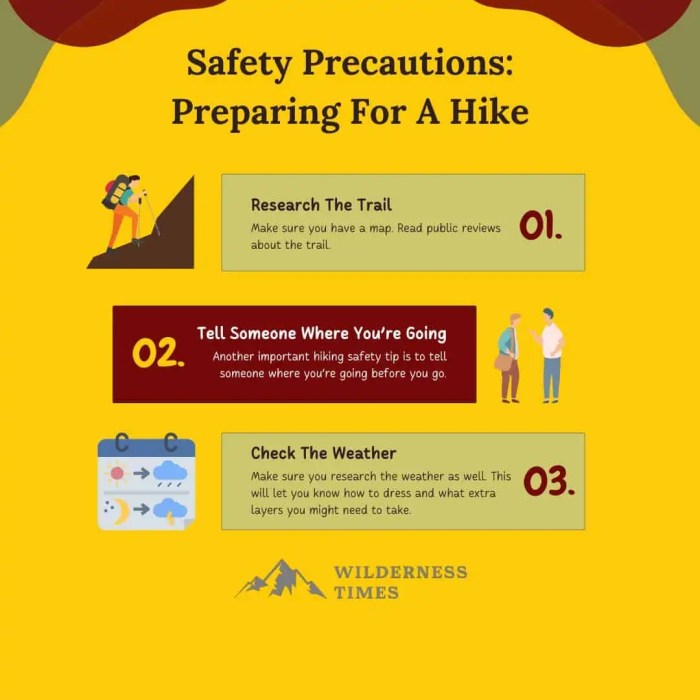
When preparing for a hike, it is crucial to consider several safety tips to ensure a safe and enjoyable outdoor experience. From checking the weather forecast to packing essential items, these tips play a significant role in your hiking adventure.
Check the Weather Forecast
Before heading out on a hike, always check the weather forecast for the trail and surrounding areas. Sudden changes in weather conditions can pose risks such as hypothermia or heat exhaustion. Being aware of the weather can help you pack the appropriate gear and clothing for the hike.
Proper Footwear and Clothing
Wearing the right footwear and clothing is essential for a safe hiking experience. Invest in proper hiking boots that provide ankle support and have good traction to prevent slips and falls. Dress in layers to regulate body temperature and protect yourself from elements like rain, wind, or sun exposure.
Stay Hydrated and Carry Enough Water
Hydration is key when hiking, especially on long or strenuous trails. Carry an adequate amount of water to stay hydrated throughout the hike. Dehydration can lead to fatigue, dizziness, and other health issues. Consider using a hydration pack or water bottles to ensure you have enough water for the entire journey.
Navigation and Emergency Preparedness
Carrying the right tools and having a plan in case of emergencies are crucial aspects of hiking safety. Here, we will discuss the importance of navigation tools and being prepared for unexpected situations.
Carrying Navigation Tools
- Always carry a map, compass, or GPS device to help you navigate through different trails and terrains.
- These tools can help you stay on track, avoid getting lost, and find your way back to safety if needed.
- Make sure you know how to use these tools before heading out on a hike.
Informing Someone About Your Plans
- Before starting your hike, inform a trusted person about your hiking plans, including the trail you will be on and your expected return time.
- This information can be crucial in case you get lost or encounter an emergency situation.
- Provide them with a detailed itinerary and contact information in case they need to reach you.
Handling Emergency Situations
- In case of an emergency while hiking, stay calm and assess the situation.
- Basic first aid knowledge is essential – carry a first aid kit and know how to use it for minor injuries.
- If you need help, signal for assistance by using a whistle, mirror, or brightly colored clothing to attract attention.
- Make sure to know the universal distress signal of three loud noises, repeated at regular intervals, to signal for help.
Final Wrap-Up

As you conclude your hiking adventures, remember the vital tips shared in How to Hike Safely: 7 Hiking Safety Tips to ensure every hike is a safe and enjoyable one. Stay safe and happy trails!