Embark on an adventure with our guide on How to Camp in the Wilderness: 12 Camping Tips for Beginners, where we delve into essential gear, setting up camp, and wilderness etiquette.
Essential Gear for Wilderness Camping

When heading out into the wilderness for a camping trip, having the right gear is crucial to ensure a safe and enjoyable experience. Here are the must-have items for a successful camping adventure:
Tent
- A good quality tent provides shelter from the elements and a comfortable place to rest.
- Choose a tent size based on the number of people camping and the weather conditions expected.
- Look for features like waterproofing and ventilation to suit different seasons.
Sleeping Bag
- A warm and insulated sleeping bag is essential for a good night’s sleep in the wilderness.
- Consider the temperature rating of the sleeping bag to match it with the expected weather conditions.
- Look for lightweight and compressible options for easy packing and carrying.
Camping Stove
- A portable camping stove allows you to cook meals and boil water while camping.
- Choose a stove that is fuel-efficient and easy to use in outdoor settings.
- Consider the type of fuel available and the cooking capacity of the stove.
First Aid Kit
- A well-stocked first aid kit is essential for treating minor injuries and emergencies while camping.
- Include items like bandages, antiseptic wipes, pain relievers, and any necessary medications.
- Regularly check and replenish the supplies in your first aid kit before each trip.
Headlamp or Flashlight
- A reliable source of light is crucial for navigating in the dark and finding your way around the campsite.
- Choose a headlamp for hands-free illumination or a flashlight with long battery life.
- Carry extra batteries or a power bank to ensure you have light when needed.
Setting Up Camp in the Wilderness
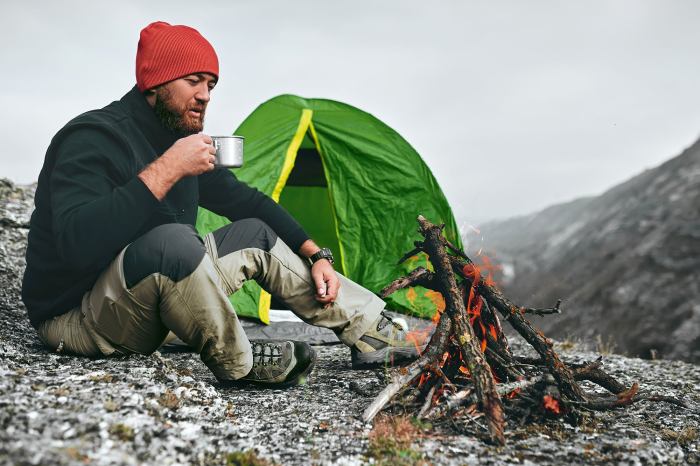
When setting up camp in the wilderness, it is crucial to choose the right campsite, prioritize safety when setting up your tent, and responsibly build a campfire for cooking and warmth.
How to Select a Campsite
Choosing the perfect campsite can make or break your wilderness camping experience. Follow these steps to select an ideal location:
- Look for a flat and level area to pitch your tent to ensure a comfortable sleep.
- Avoid setting up camp near water sources to prevent flooding or insect issues.
- Check for potential hazards like falling branches, rocks, or wildlife habitats.
- Consider the direction of the wind to place your tent accordingly for ventilation and comfort.
Safety Measures for Setting Up a Tent
Ensuring safety when setting up your tent in the wilderness is paramount to avoid accidents or injuries. Follow these guidelines:
- Clear the camping area of any sharp objects, rocks, or debris that could damage your tent floor.
- Secure tent stakes firmly to prevent the tent from collapsing in case of strong winds.
- Avoid placing the tent under dead trees or branches that could fall during the night.
- Always keep a flashlight or headlamp handy in case you need to navigate in the dark.
Building a Campfire Responsibly
Campfires can provide warmth, light, and a means to cook food while camping. Follow these tips to build and maintain a campfire responsibly:
- Clear the area around the fire pit of any flammable materials like leaves, twigs, and branches.
- Use a designated fire ring or build a fire pit with rocks to contain the flames.
- Never leave a campfire unattended and always fully extinguish it before leaving the campsite.
- Keep a bucket of water or a fire extinguisher nearby in case of emergencies.
Wilderness Camping Etiquette
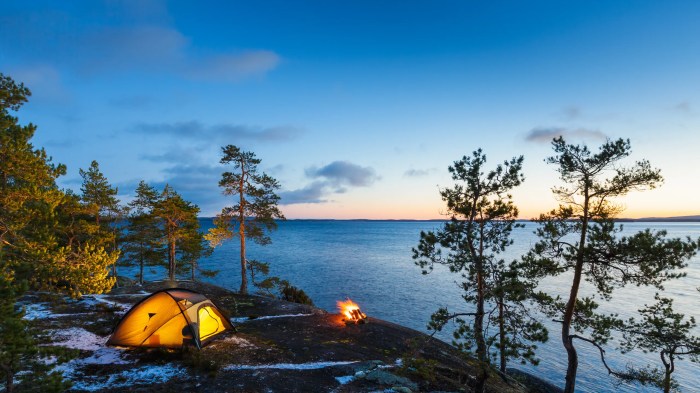
When camping in the wilderness, it is essential to follow proper etiquette to ensure the preservation of the environment and the safety of both campers and wildlife.
Leave No Trace Principles:
Leaving no trace means minimizing your impact on the environment by following a set of principles. This includes packing out all trash, minimizing campfire impact, respecting wildlife, and staying on designated trails. These principles are crucial in preserving the wilderness for future generations to enjoy.
Proper Waste Disposal Methods
- Always pack out your trash: Make sure to bring trash bags and dispose of them properly when you return to civilization.
- Bury human waste: Dig a small hole at least 200 feet away from water sources, campsites, and trails. Cover it up properly after use.
- Avoid using soap in natural water sources: Use biodegradable soap if necessary and rinse away from water bodies.
Respecting Wildlife and Local Ecosystems
- Observe wildlife from a distance: Do not approach or feed wild animals as it can disrupt their natural behavior and pose risks to both them and you.
- Stay on designated trails: Avoid trampling vegetation and disturbing sensitive ecosystems by sticking to established paths.
- Do not pick plants or disturb natural features: Leave everything as you found it to preserve the beauty and balance of the wilderness.
Final Conclusion
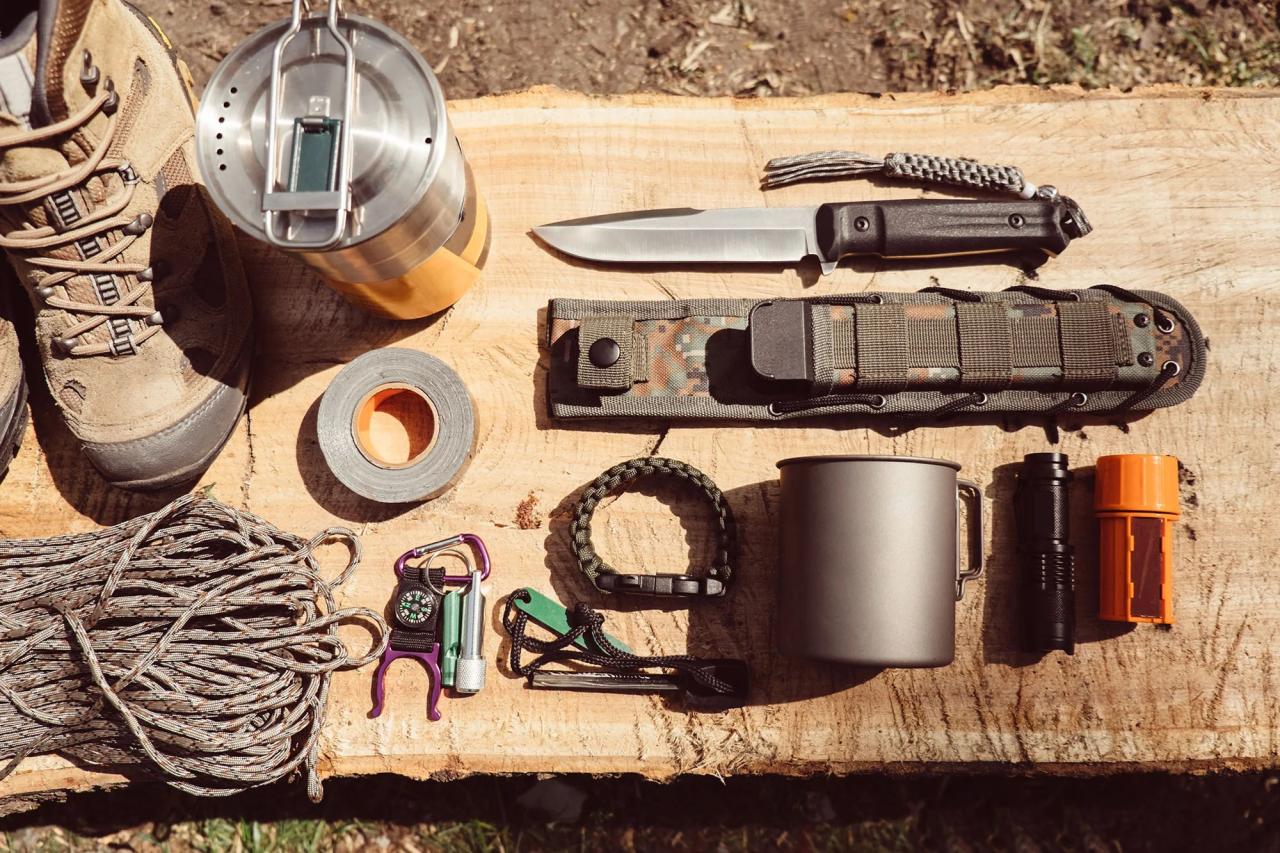
As you wrap up your camping journey armed with these tips, remember to leave no trace, respect nature, and savor the memories made under the stars.